Plunge
Plunge All-In
8.5/ 10
Best for All-in-one cold and contrast therapy with minimal upkeep
- Minimum temperature
- 37 °F
- Chiller
- 1.0 HP
- Capacity
- 1 person
$8,640$9,990
ResearchThe decisions that actually matter — chilling power, maintenance, indoor vs outdoor, size and budget — and how to weigh them before spending thousands.
By Well Objects Research · Updated 2026-08-18 · 5 min read

A cold plunge is one of the larger single purchases in a home wellness setup, and the market runs from a $1,000 barrel you fill with ice to a $20,000 stainless-steel machine. This guide walks through the decisions that actually change your day-to-day experience — in roughly the order you should make them — so you can match a tub to how you'll really use it rather than to a spec sheet.
Before comparing anything, be honest about frequency. It's the single most useful predictor of which tub is right for you.
If you'll plunge most days, a self-contained tub with an integrated chiller is worth the money — it removes the daily chore and turns cold exposure into a genuine habit. If you'll use it a few times a week, or you're still testing whether cold exposure suits you, a simpler ice-cooled barrel gets you started for a fraction of the cost.
That one decision — powered chiller versus ice — shapes everything else: price, footprint, maintenance and where you can put it. Everything below assumes you've made a rough call here.
If a plunge sits unused, the reason is almost always friction — cold that took effort to prepare, or water that needed cleaning. Buy to remove friction, not to win a spec comparison.
Two numbers do most of the work: the minimum temperature a unit can reach, and the chiller horsepower that lets it hold that temperature under load. In a temperate indoor room almost any consumer chiller copes; outdoors, in a hot climate, or with back-to-back users, a stronger chiller is the difference between water that stays on target and water that drifts warm by afternoon.
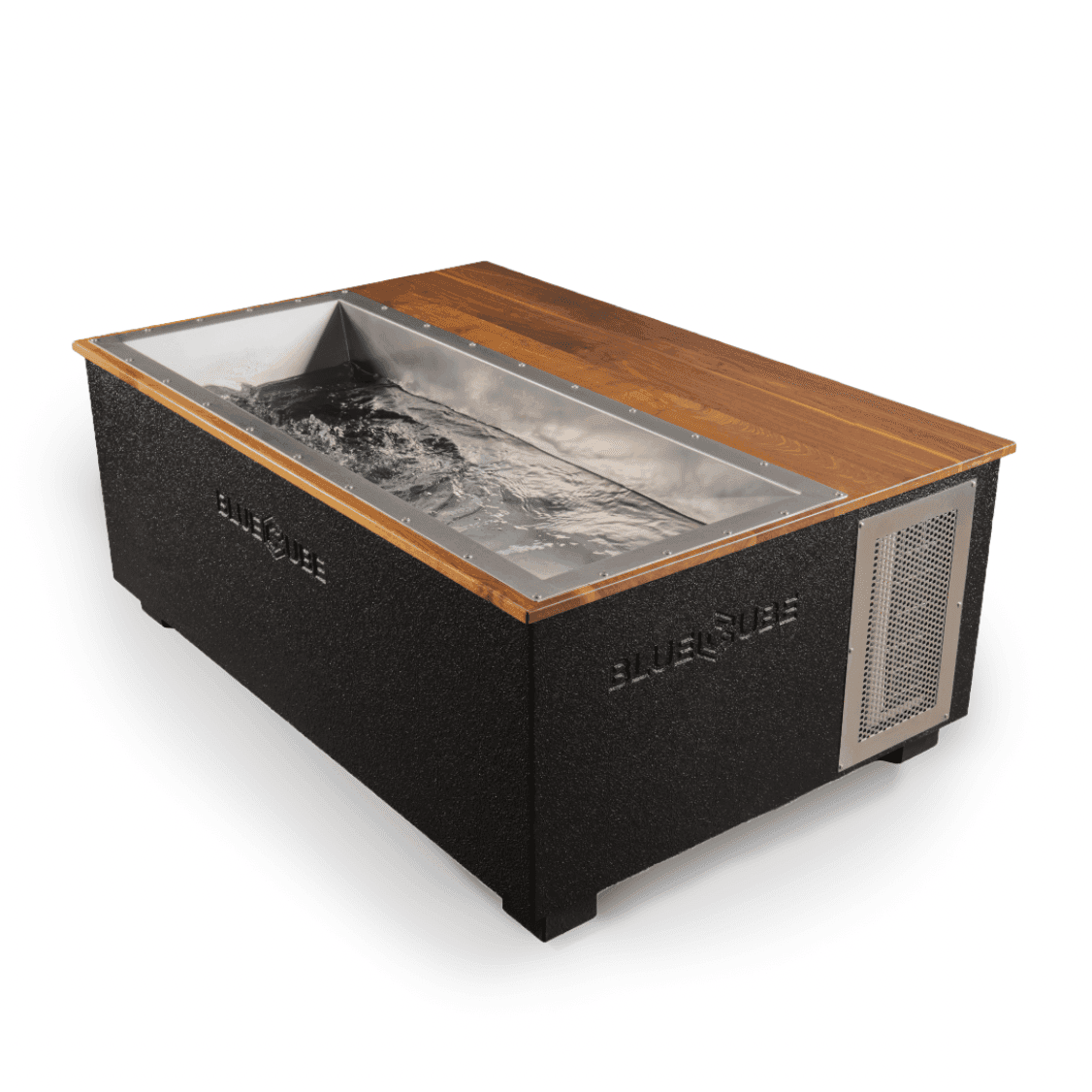
Be wary of a quoted minimum temperature without context. A tub that reaches 37°F in a 60°F basement may only manage the mid-40s on a hot patio. If you plunge outdoors or share the tub, prioritise chiller power over the headline low temperature. The strongest residential units — like the BlueCube C3 — are built around oversized chillers precisely so temperature never sags, which is a large part of what you're paying for at the top of the market.

Filtration and sanitation decide how often you change the water and how much upkeep you're signing up for. This is the factor buyers most often underestimate, and the one most likely to make a plunge sit unused.
Be realistic about how much maintenance you'll tolerate. If you want the habit without the chore, filtration is not a luxury — it's the feature that keeps you using the tub. Our guide to low-maintenance picks covers the tubs that ask the least of you.
Check three physical things before you buy:
Measure the space including the clearance a lid or cover needs. Capacity matters too: most plunges are single-user, and only a few are built for two people or fast recovery between multiple users. If a couple or a household will share it, look specifically for that.
Most integrated plunges run on a standard 110–120V outlet, though a dedicated 20A circuit is recommended for the more powerful chillers. Ice barrels need no electrical at all. If you're placing a powered tub outdoors, plan a weatherproof, GFCI-protected outlet nearby — this is the one job worth booking an electrician for even when the tub itself is plug-and-play.
Cold-plunge pricing clusters into clear tiers. These are current 2026 figures from tubs in our database; prices move with promotions, so treat them as the shape of the market rather than quotes.
| Tier | Typical price | What you get | Example |
|---|---|---|---|
| Entry / ice | $1,000–$2,500 | No chiller; you add ice. Simple, portable. | Ice Barrel 300 (~$1,150) |
| Barrel + chiller | $2,500–$5,000 | Wood or composite tub with an add-on chiller. | Redwood Alaskan (~$2,500) |
| Integrated all-in-one | $8,000–$15,000 | Self-contained chiller, ozone, filtration, insulation. | Plunge All-In, Renu Cold Stoic 3.0 |
| Commercial-grade | $15,000+ | Oversized chiller, fast recovery, multi-user. | BlueCube C3 (~$20,500) |
Budget on top of the sticker for freight delivery (these ship as heavy pallets) and any electrical work. If you want to see the full tier below a given number, the best cold plunges under $10,000 shortlist covers almost the entire home market.
Warranties vary widely — from one year on the budget end to five years or lifetime on the structure for premium steel tubs. Because a chiller is the part most likely to need service, pay attention to the chiller warranty specifically, not just the shell. A lifetime shell warranty with a one-year chiller is telling you where the manufacturer expects problems.
When you've settled on a tier, put two or three finalists head to head — for example Plunge All-In vs Renu Cold Stoic — to see scores, specs and the per-criterion winner side by side. And if you're building a full contrast setup, our home recovery room guide covers how the plunge fits alongside a sauna.
Most people find 45–50°F plenty for a daily habit; experienced users and athletes often prefer 38–45°F. Below 39°F you're into serious cold-adaptation territory. The spec that matters is not just the minimum temperature a unit can reach but whether its chiller can hold that temperature in your room or climate.
A chiller makes cold plunging effortless and repeatable — set a temperature and it's ready daily. Ice is cheaper up front but becomes costly and tedious for daily use. Occasional users can start with an ice barrel; daily users almost always move to a chilled tub.
Entry ice barrels start around $1,000–$1,200. Wood barrels with an add-on chiller run $2,500–$5,000. Fully integrated all-in-one tubs run roughly $8,000–$15,000, and commercial-grade units exceed $20,000. Budget separately for freight delivery and any electrical work.
Units with ozone and micron filtration keep water usable for weeks, needing little more than the occasional wipe-down. Basic barrels without filtration need draining and refilling far more often. Filtration and sanitation are the specs that most affect day-to-day effort.
Many can, but confirm the unit is rated for outdoor use and remember that a chiller works much harder outdoors in a hot climate — so a stronger chiller matters more there. Freezing climates raise separate concerns about plumbing and freeze protection.
We may earn a commission when you purchase through links on our site. This does not influence our scoring methodology or recommendations.
Plunge
Best for All-in-one cold and contrast therapy with minimal upkeep
Renu Therapy
Best for Design-led buyers who want a long warranty
Ice Barrel
Best for Testing the habit, small spaces and occasional use
BlueCube
Best for Athletes and facilities needing very cold, fast-recovering water
Browse every cold plunges we've researched, or jump straight to our top picks.
Occasional research notes, new comparisons and buying guides. No spam, unsubscribe anytime.